
Rav
Co-founder & CEO
2x startup founder and former EMEA Lead at Meta, where his team helped roll out new products and scale engagement. Previously built the "Netflix for News", where he brokered deals with the world's leading media companies.
Catapult is the agent built to handle your most ambitious knowledge work.
By the time you give it your first task, Catapult has already spent hours building an understanding of you and everything you've worked on, across your emails, messages, meetings, documents, and tools.
So it knows how you write. How you decide. What you're building and why. Every project's backstory and what needs to happen next. All as if it had been with you from day one.
That understanding deepens as you work, compounding from one task to the next. No explaining yourself. No markdown files to maintain. No skills to write.
In our internal tests, Catapult outperforms the highest-tier models in Claude Cowork and ChatGPT Work on most knowledge work tasks (See examples).
We’re a deliberately small, obsessed team of repeat founders, researchers and engineers from Meta, Amazon Research, G-Research, Oxford, Cambridge and Imperial.
We will transform how the world works. If that excites you, join us.
See open roles


Every day, we're solving problems at the frontier of AI. Here are just three of many we're working on:
We don't use MCPs to pull in user information at inference time. We continually ingest data, allowing us to pre-process it and build a far richer representation than any alternative. As we do, we build memory systems, learn abstract patterns, and construct high-level theories of the user and their data. And that's just the beginning. No one goes deeper than we do, and it shows.
Building agents that can act in the real world requires understanding a user’s world. That world is particular and complex. It spans sophisticated sources such as databases, spreadsheets, CRMs and many others that cannot simply be “pulled into context.” This requires building an abstract understanding and creating agents that can use it to intelligently—and safely—write and execute programs that read from those sources and take action. How do we build that bespoke understanding? And how do we use it to create the smartest coding agents? Anthropic and others have been struggling with this for good reason.
This famous open problem, with billions invested in solving it, comes down to building highly effective compaction systems. These systems mimic human memory, predicting what can be forgotten during a conversation and what will matter later. It's an enormously complex process in humans and remains unsolved across AI. Our end-to-end approach, particularly our context engine, opens up unique and promising ways to tackle it.
If you want to work on these problems with us, we want to hear from you.
Co-founder & CEO
2x startup founder and former EMEA Lead at Meta, where his team helped roll out new products and scale engagement. Previously built the "Netflix for News", where he brokered deals with the world's leading media companies.

Co-founder & CTO
Former Cambridge researcher, PhD student and Gates Scholar who taught mathematics, linguistics, statistics, theoretical CS, and AI. Worked on numerous topics at the cutting edge of mathematics and theoretical CS motivated by the P vs NP problem.

Founding Senior Engineer
Previously co-founded a deep tech startup where he built a quantum number generator. Helped build UCL and Imperial College's computational teams. Holds a PhD in particle physics.
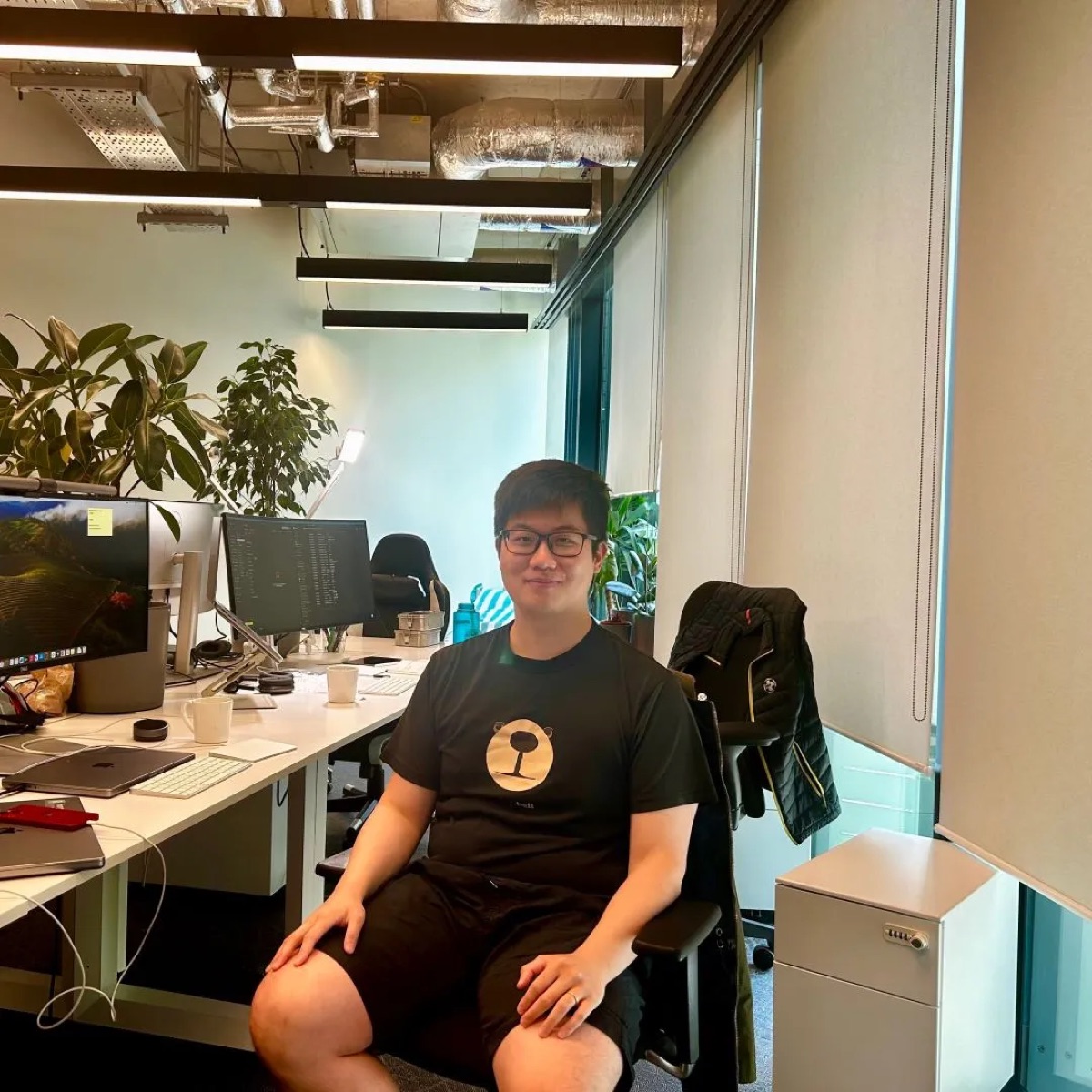
Founding AI Research Engineer
Oxford and Imperial educated researcher who continued on to Amazon Research and JP Morgan. A specialist in reinforcement learning, he built the internal coding agent at JP Morgan using small local models.
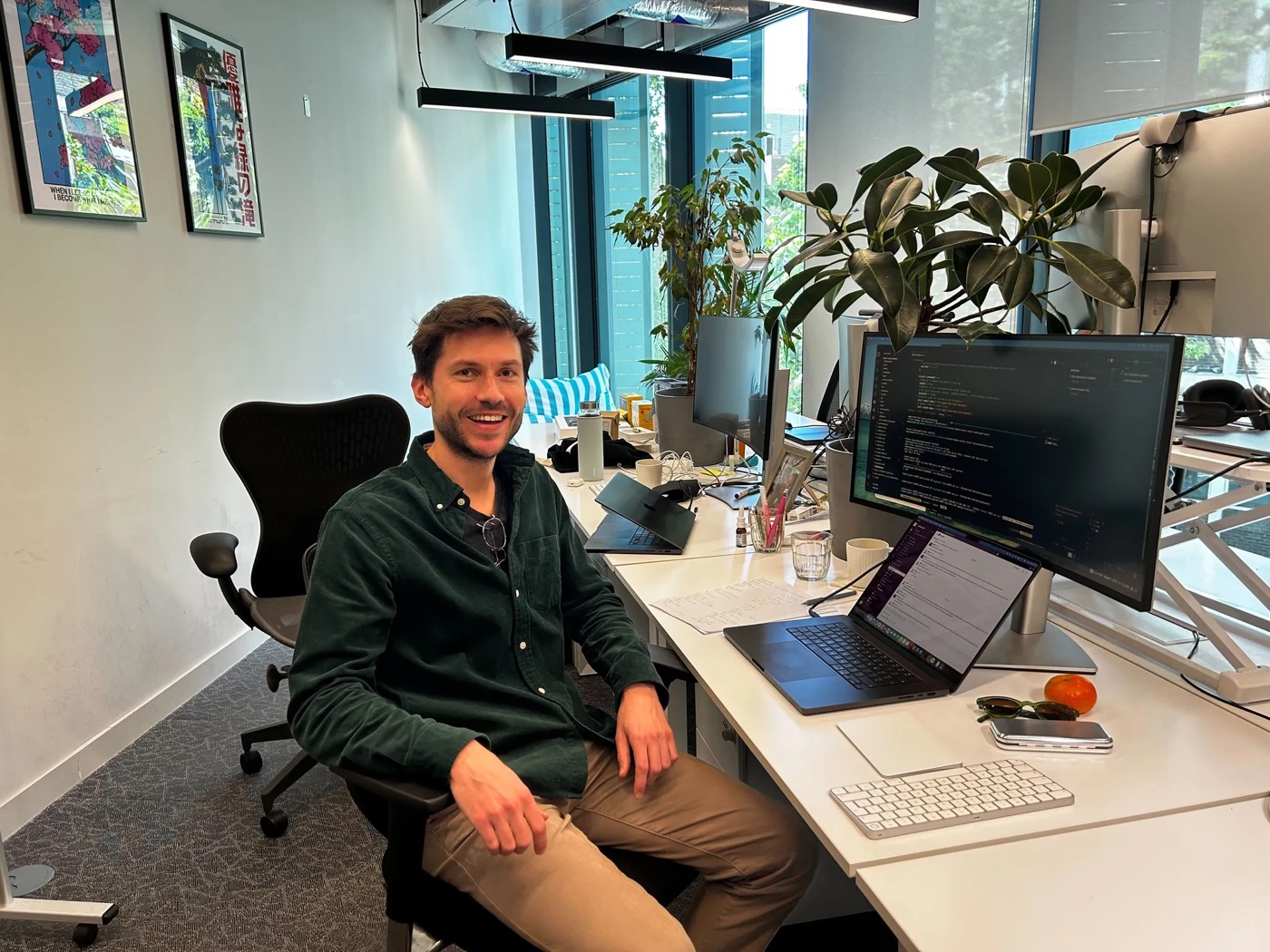
Founding AI Research Engineer
Educated at ENSAE Paris and Paris Diderot University, he has worked across quantitative finance, payments, and applied AI in both New York and London. His background includes working on trading signals and NLP systems at G-Research, as well as developing Checkout.com's first machine learning fraud detection platform.
Apply to one of our roles below
We care deeply about the culture we're building. A culture where exceptional people can do the best work of their lives, have fun doing it, and solve problems that genuinely matter. That requires making deliberate choices about how we work. And it means Catapult won't be for everyone.
If you're more excited after reading the above, we want to hear from you.
Claude and OpenAI are building increasingly intelligent general models. We are solving a different problem: giving AI a deep, persistent understanding of your work.
Their connectors and MCPs retrieve a few emails, messages or documents after you ask a question. Catapult already understands how those conversations, people, projects and decisions connect, and keeps that understanding current as your work changes.
Models will keep improving and we can use whichever one is best. Our advantage compounds separately: a living model of you, your company and how work actually gets done. Better intelligence helps everyone. Better context makes Catapult better for our users.
In our internal tests, Catapult outperforms the highest-tier models in Claude Cowork and ChatGPT Work on most knowledge work tasks. Examples include:
Real work is messy. A single decision might begin in a meeting, continue in Slack, appear in an email and eventually change a document or customer plan.
Catapult must understand those connections across millions of pieces of information, keep that understanding current, respect permissions and reliably select the right context for each task. We are also solving evaluation, safety, document understanding and agent execution across wildly different customer environments.
Our typical process is:
We do not rely on generic coding tests. We care more about how you reason, communicate and work on a difficult problem with the team.
Yes. We sponsor visas for exceptional people and already have the infrastructure to do it.
We care about finding the best person, not where they were born or which passport they hold. If there is a strong mutual fit, we will work with you on the appropriate UK visa route and cover the company side of the process.
We offer competitive salaries and meaningful stock options because we want everyone at Catapult to share in the upside they help create.
Our UK benefits include:
You'll contribute from day one and take ownership of meaningful problems within your first month, turning them into something users rely on. Expect direct support, fast feedback and broad responsibility, not layers of management or a narrow box.